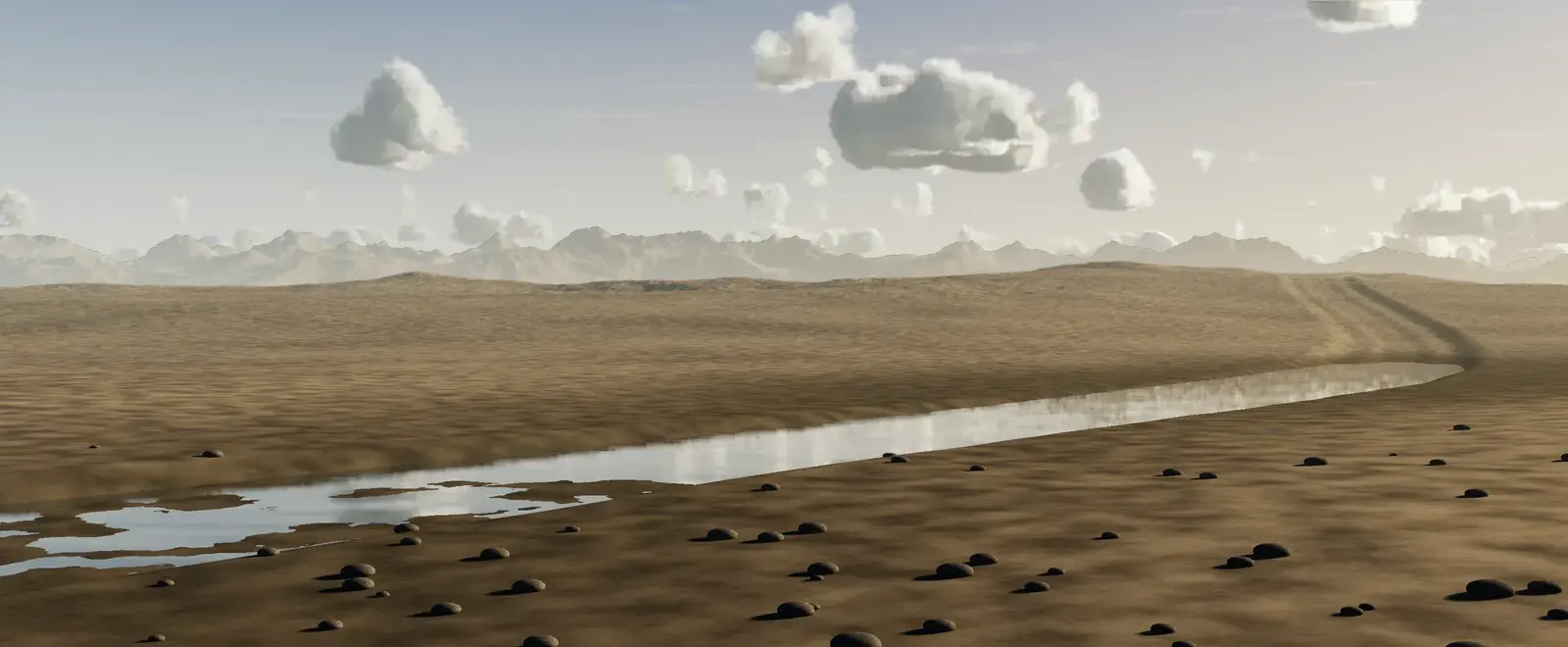

The Variscan orogeny, also called the Hercynian orogeny, was a long mountain-building event that took place in the Devonian and Carboniferous periods, as the supercontinents Gondwana and Laurussia collided to form the larger supercontinent Pangaea. It created a chain of mountains that stretched across what is now central and southern Europe, with remnants in Iberia, the Massif Central, the Ardennes, the Black Forest, the Harz and parts of the British Isles. The mountains have since been mostly eroded away. The same collision was linked with the Appalachian Mountains in North America. The swamps that grew in the basins at the foot of the range provided the source of Europe's coal deposits.
Before and after
- from about 2.4 billion years ago to 2.1 billion years agoHuronian glaciation
- from about 1.8 billion years ago to 800 million years agoBoring Billion
- about 543 million years agoCambrian explosion
- about 444 million years agoOrdovician–Silurian extinction event
- from about 380 million years ago to 280 million years agoVariscan orogeny
- about 375 million years agoFish with limbs begin to walk: tetrapods evolve
- about 372 million years agoLate Devonian extinction
- about 252 million years agoPermian-Triassic mass extinction
- about 225 million years agoThe first mammals appear
More in Earth & climate
- 79 CEVesuvius buries Pompeii and Herculaneum
- from 1303 to 1850Little Ice Age
- from October 1347 to January 1351The Black Death reaches Europe
- 1938Establishment of Mount Olympus
- 2001Establishment of Phong Nha–Ke Bang National Park
- 11 March 2020The WHO declares COVID-19 a pandemic
The era
This moment belongs to the Paleozoic (539 million years ago to 252 million years ago), from the first animals to the first forests.