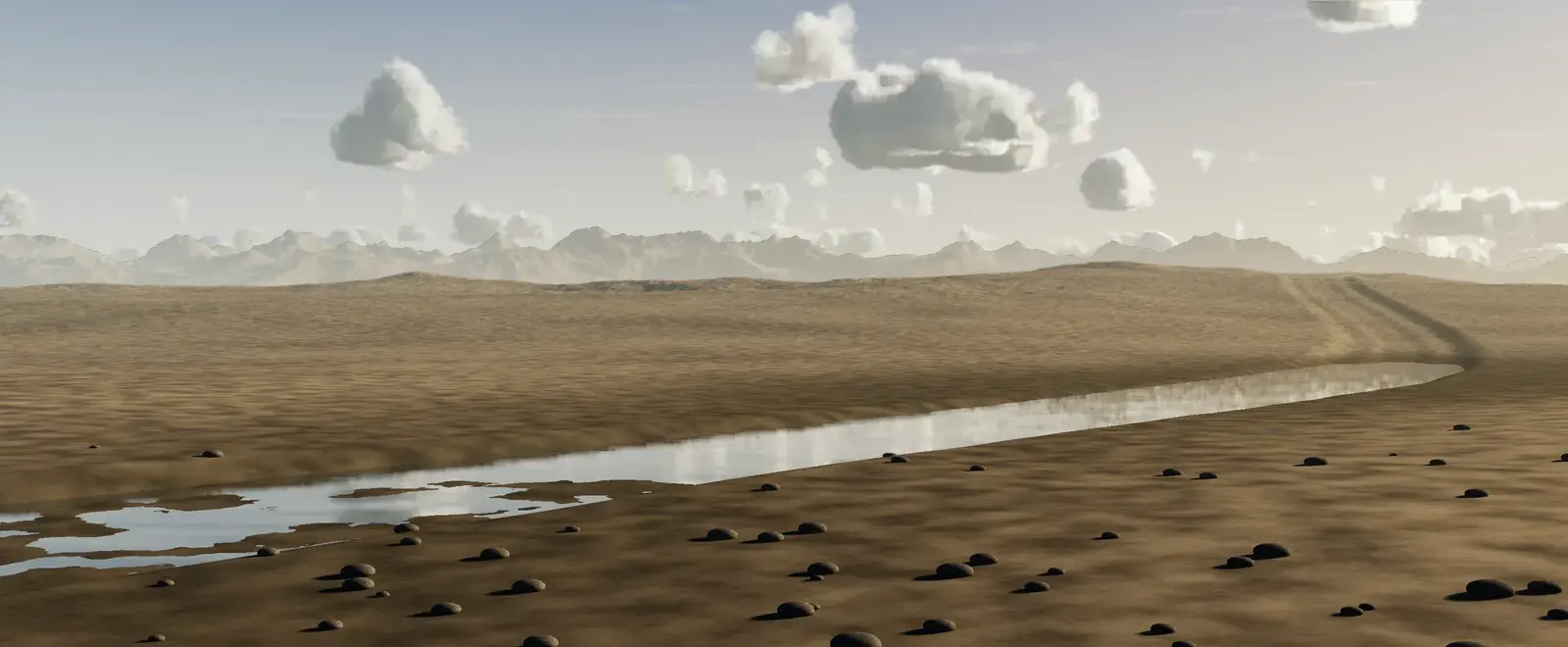

In the late Devonian, about 375 million years ago, lobe-finned fishes in shallow waters developed sturdy fins with wrist-like joints, a neck and lungs. Tiktaalik, found on Ellesmere Island, Canada, in 2004, is a famous intermediate form with a flat head, a mobile neck and fins with bones that could prop up the body. Within a few million years true limbed animals, such as Ichthyostega and Acanthostega, appeared. They gave rise to all amphibians, reptiles, birds and mammals, including humans.
Before and after
- from about 1.8 billion years ago to 800 million years agoBoring Billion
- about 543 million years agoCambrian explosion
- about 444 million years agoOrdovician–Silurian extinction event
- from about 380 million years ago to 280 million years agoVariscan orogeny
- about 375 million years agoFish with limbs begin to walk: tetrapods evolve
- about 372 million years agoLate Devonian extinction
- about 252 million years agoPermian-Triassic mass extinction
- about 225 million years agoThe first mammals appear
- about 201 million years agoTriassic-Jurassic mass extinction
More in Evolution & life
- about 66 million years agoCretaceous-Paleogene mass extinction
- from c. 3,300 BCE to 600 BCEBronze Age
- from 3rd millennium BCE to 2nd millenniumMaya civilization
- from 13th century BCE to 6th centuryAncient Greece
- from 1200 to 1523Aztec
- 24 November 1974Discovery of Lucy
The era
This moment belongs to the Paleozoic (539 million years ago to 252 million years ago), from the first animals to the first forests.