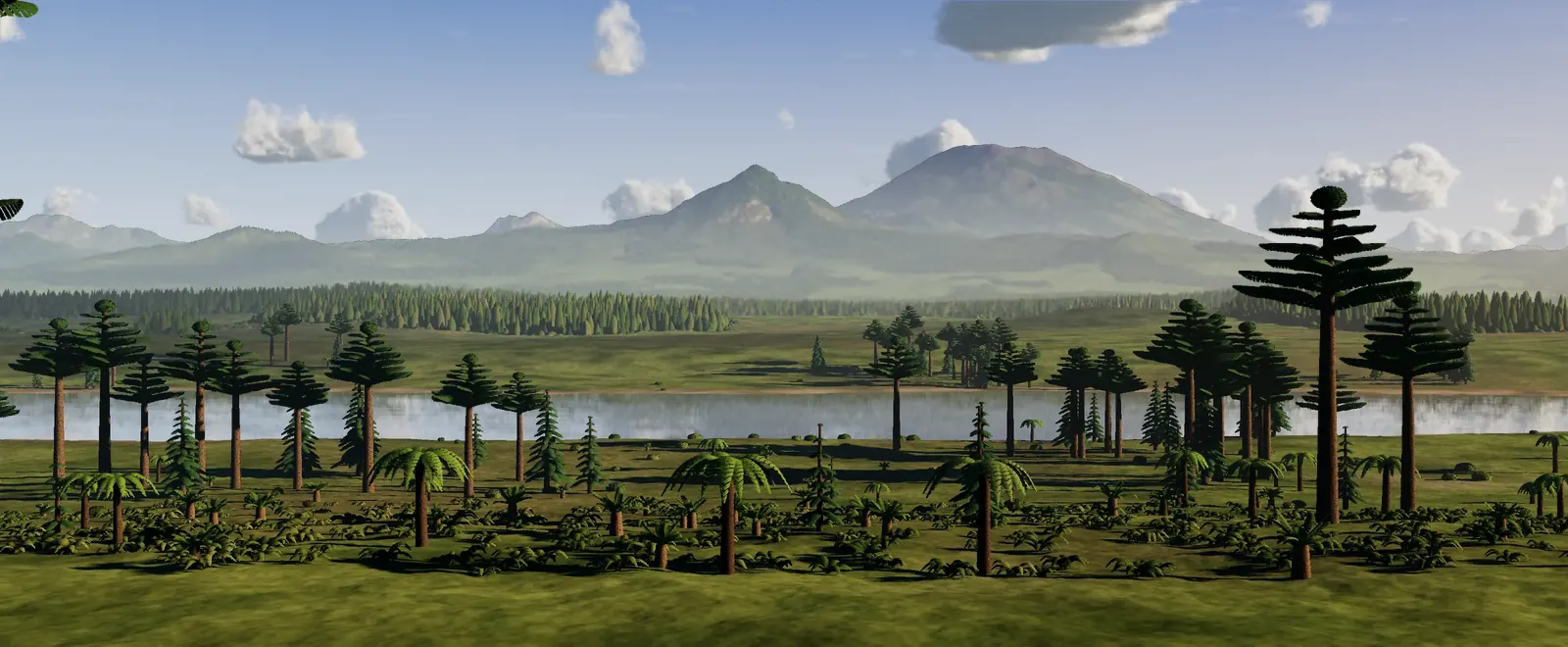

Small, warm-blooded and probably nocturnal, the first true mammals evolved from cynodont reptiles about 225 to 200 million years ago, during the Late Triassic. Fossils such as Morganucodon from Wales and China show typical features: a jaw with a single bone, differentiated teeth and an enlarged brain. For 150 million years, throughout the age of dinosaurs, mammals remained mostly small, but they diversified. After the extinction of the non-avian dinosaurs, they took over many of the large body niches.
Before and after
- from about 380 million years ago to 280 million years agoVariscan orogeny
- about 375 million years agoFish with limbs begin to walk: tetrapods evolve
- about 372 million years agoLate Devonian extinction
- about 252 million years agoPermian-Triassic mass extinction
- about 225 million years agoThe first mammals appear
- about 201 million years agoTriassic-Jurassic mass extinction
- about 150 million years agoArchaeopteryx, the earliest known bird, lives in Jurassic Bavaria
- about 66 million years agoCretaceous-Paleogene mass extinction
- about 56 million years agoPaleocene–Eocene Thermal Maximum
More in Evolution & life
- from 56th century BCE to 20th century BCESumer
- from c. 3,300 BCE to 600 BCEBronze Age
- from 3rd millennium BCE to 2nd millenniumMaya civilization
- from 13th century BCE to 6th centuryAncient Greece
- from 1200 to 1523Aztec
- 24 November 1974Discovery of Lucy
The era
This moment belongs to the Mesozoic (252 million years ago to 66 million years ago), the age of dinosaurs.