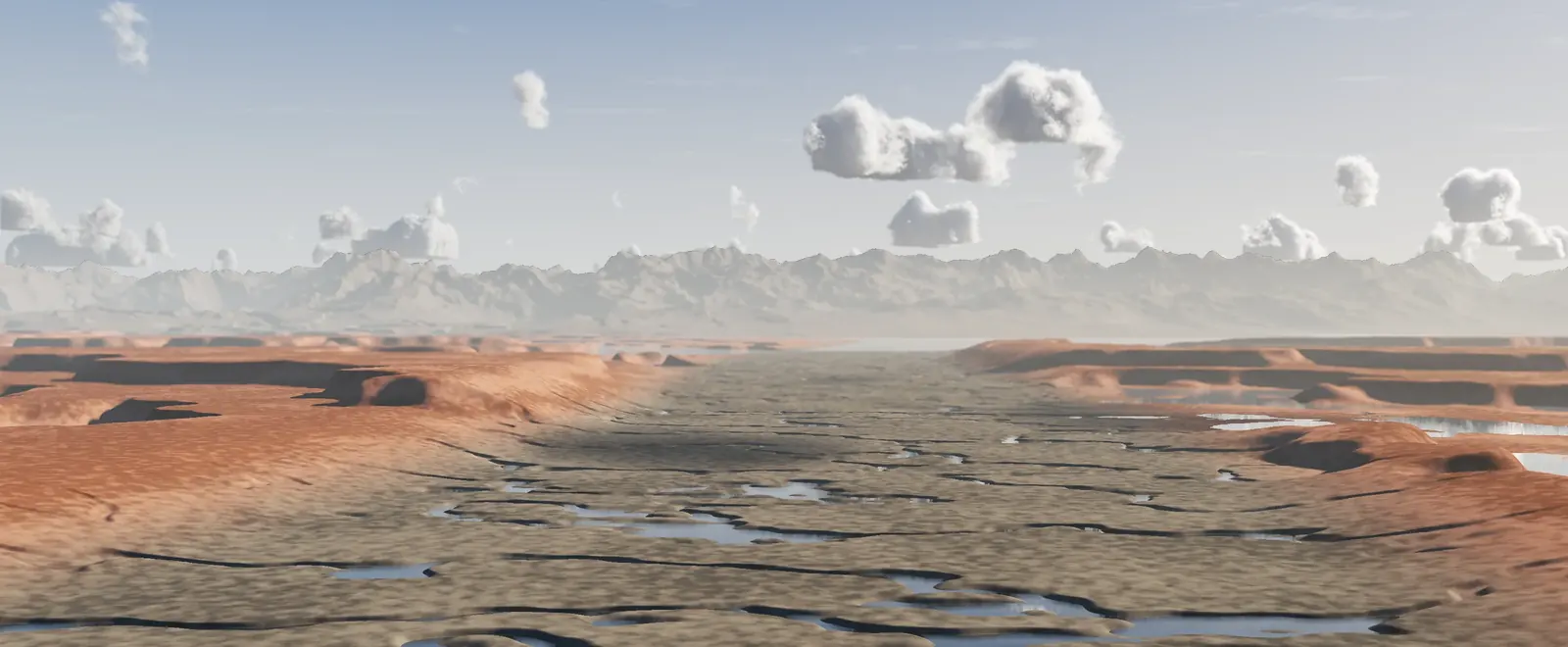

The Cambrian explosion was a geologically rapid diversification of animal life at the start of the Cambrian Period, over a span of perhaps twenty million years or more. In rocks of this age, the fossil record first shows representatives of most of the major animal groups, many of them with hard parts such as shells and exoskeletons, which fossilise well. Famous sites such as the Burgess Shale in Canada and Chengjiang in China preserve soft-bodied creatures including Anomalocaris and Hallucigenia, along with the trilobites. Soft-bodied forms from the preceding Ediacaran period show that animals had begun to evolve earlier. Scientists still debate the causes, which may include rising oxygen levels, the evolution of predation and genetic changes. Darwin regarded the sudden appearance of these fossils as a difficulty for his theory.
Before and after
- from about 4.1 billion years ago to 3.8 billion years agoLate Heavy Bombardment
- from about 3.92 billion years ago to 3.85 billion years agoNectarian
- from about 2.4 billion years ago to 2.1 billion years agoHuronian glaciation
- from about 1.8 billion years ago to 800 million years agoBoring Billion
- about 543 million years agoCambrian explosion
- about 444 million years agoOrdovician–Silurian extinction event
- from about 380 million years ago to 280 million years agoVariscan orogeny
- about 375 million years agoFish with limbs begin to walk: tetrapods evolve
- about 372 million years agoLate Devonian extinction
More in Evolution & life
- about 66 million years agoCretaceous-Paleogene mass extinction
- from c. 3,300 BCE to 600 BCEBronze Age
- from 3rd millennium BCE to 2nd millenniumMaya civilization
- from 13th century BCE to 6th centuryAncient Greece
- from 1200 to 1523Aztec
- 24 November 1974Discovery of Lucy
The era
This moment belongs to the Proterozoic (2.5 billion years ago to 539 million years ago), oxygen, complex cells and Snowball Earth.