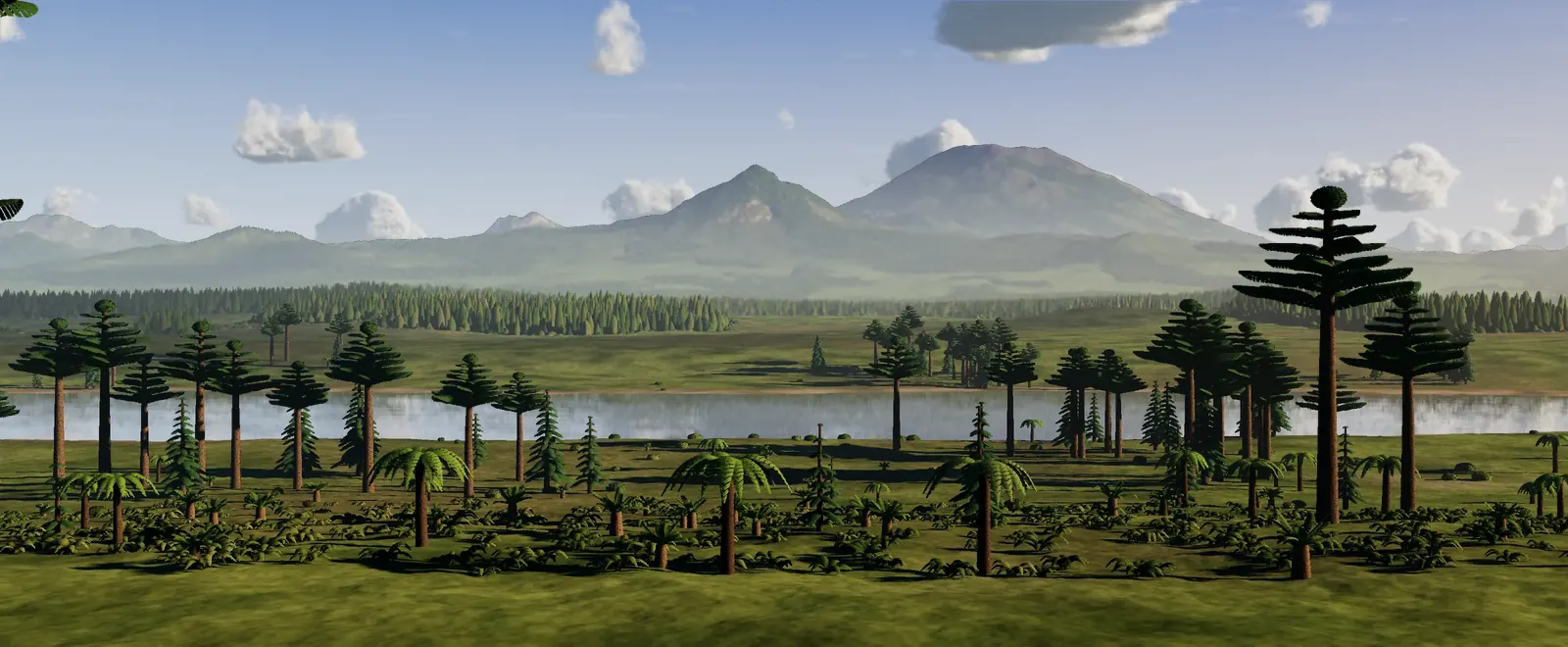

The Permian-Triassic extinction, often called the Great Dying, was the most severe mass extinction in Earth's history. It wiped out the great majority of marine species, an estimated 90 percent or more, and a large share of land animals and plants. The leading explanation is massive volcanic eruptions in the Siberian Traps, which released huge amounts of carbon dioxide and other gases, causing global warming, ocean acidification and the loss of oxygen in the seas. Trilobites, which had lived for hundreds of millions of years, disappeared. Recovery was slow and took millions of years, and the Triassic that followed saw the rise of new groups, including the first dinosaurs and early relatives of the mammals.
Before and after
- about 444 million years agoOrdovician–Silurian extinction event
- from about 380 million years ago to 280 million years agoVariscan orogeny
- about 375 million years agoFish with limbs begin to walk: tetrapods evolve
- about 372 million years agoLate Devonian extinction
- about 252 million years agoPermian-Triassic mass extinction
- about 225 million years agoThe first mammals appear
- about 201 million years agoTriassic-Jurassic mass extinction
- about 150 million years agoArchaeopteryx, the earliest known bird, lives in Jurassic Bavaria
- about 66 million years agoCretaceous-Paleogene mass extinction
More in Evolution & life
- from 56th century BCE to 20th century BCESumer
- from c. 3,300 BCE to 600 BCEBronze Age
- from 3rd millennium BCE to 2nd millenniumMaya civilization
- from 13th century BCE to 6th centuryAncient Greece
- from 1200 to 1523Aztec
- 24 November 1974Discovery of Lucy
The era
This moment belongs to the Mesozoic (252 million years ago to 66 million years ago), the age of dinosaurs.