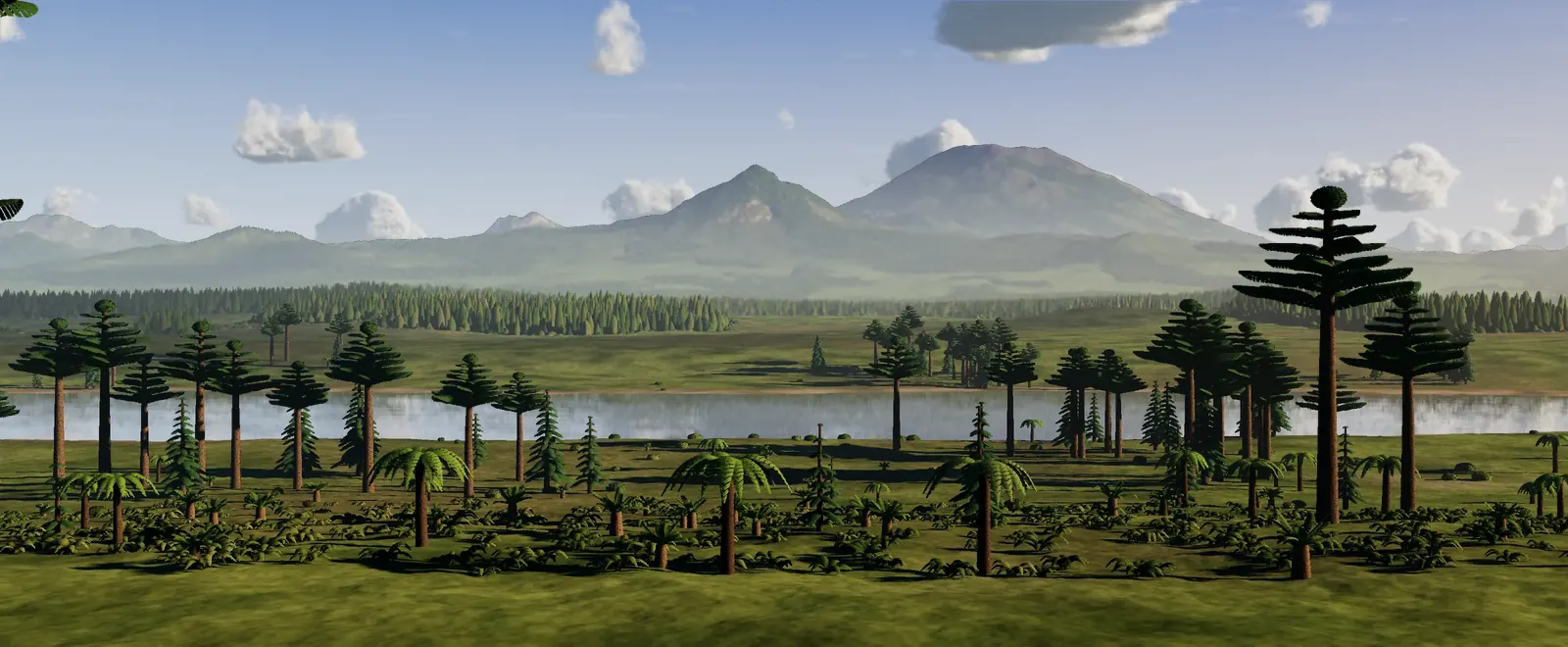

The Cretaceous-Paleogene extinction wiped out roughly three-quarters of plant and animal species and ended the Mesozoic Era. Its best-known victims were the non-avian dinosaurs, along with pterosaurs, large marine reptiles and the ammonites. In 1980 the physicist Luis Alvarez and his team proposed that a giant asteroid had struck the Earth, based on a worldwide layer of clay rich in iridium. The crater was later identified at Chicxulub on Mexico's Yucatan peninsula, and the impact is thought to have caused fires, tsunamis and a prolonged darkening of the sky. Intense volcanism in the Deccan Traps of India may also have stressed ecosystems. Birds, which descend from small dinosaurs, survived, and mammals diversified in the aftermath.
Before and after
- about 252 million years agoPermian-Triassic mass extinction
- about 225 million years agoThe first mammals appear
- about 201 million years agoTriassic-Jurassic mass extinction
- about 150 million years agoArchaeopteryx, the earliest known bird, lives in Jurassic Bavaria
- about 66 million years agoCretaceous-Paleogene mass extinction
- about 56 million years agoPaleocene–Eocene Thermal Maximum
- about 34 million years agoAntarctica freezes over
- about 33.9 million years agoEocene–Oligocene extinction event
- about 7 million years agoSahelanthropus, one of the earliest hominins
More in Evolution & life
- from 56th century BCE to 20th century BCESumer
- from c. 3,300 BCE to 600 BCEBronze Age
- from 3rd millennium BCE to 2nd millenniumMaya civilization
- from 13th century BCE to 6th centuryAncient Greece
- from 1200 to 1523Aztec
- 24 November 1974Discovery of Lucy
The era
This moment belongs to the Mesozoic (252 million years ago to 66 million years ago), the age of dinosaurs.