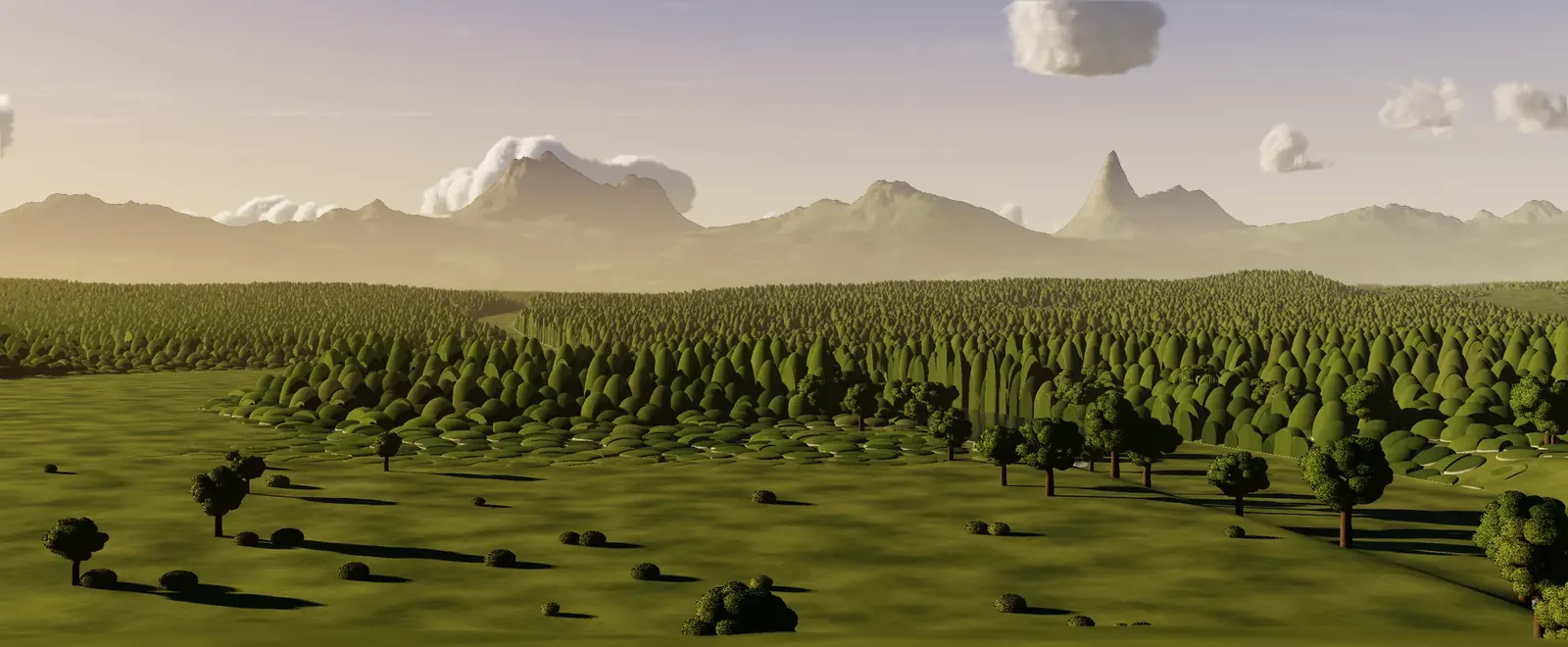

The Paleocene–Eocene Thermal Maximum was a geologically brief period of intense global warming, lasting about two hundred thousand years, during which temperatures rose by several degrees Celsius. It was associated with a massive release of carbon into the atmosphere and oceans, possibly from volcanic activity in the North Atlantic region and the release of methane from sediments. The oceans became more acidic, carbonate sediments dissolved, and many deep-sea organisms went extinct. On land, the warming coincided with the appearance and spread of modern groups of mammals, including primates, horses and even-toed hoofed mammals. The event is often studied as a natural analogue for present-day climate change, although the current rate of carbon emissions is far faster.
Before and after
- about 225 million years agoThe first mammals appear
- about 201 million years agoTriassic-Jurassic mass extinction
- about 150 million years agoArchaeopteryx, the earliest known bird, lives in Jurassic Bavaria
- about 66 million years agoCretaceous-Paleogene mass extinction
- about 56 million years agoPaleocene–Eocene Thermal Maximum
- about 34 million years agoAntarctica freezes over
- about 33.9 million years agoEocene–Oligocene extinction event
- about 7 million years agoSahelanthropus, one of the earliest hominins
- from about 3.3 million years ago to 15,000 years agoPaleolithic
More in Earth & climate
- 79 CEVesuvius buries Pompeii and Herculaneum
- from 1303 to 1850Little Ice Age
- from October 1347 to January 1351The Black Death reaches Europe
- 1938Establishment of Mount Olympus
- 2001Establishment of Phong Nha–Ke Bang National Park
- 11 March 2020The WHO declares COVID-19 a pandemic
The era
This moment belongs to the Cenozoic (66 million years ago to 300,000 years ago), the rise of mammals and the ice ages.