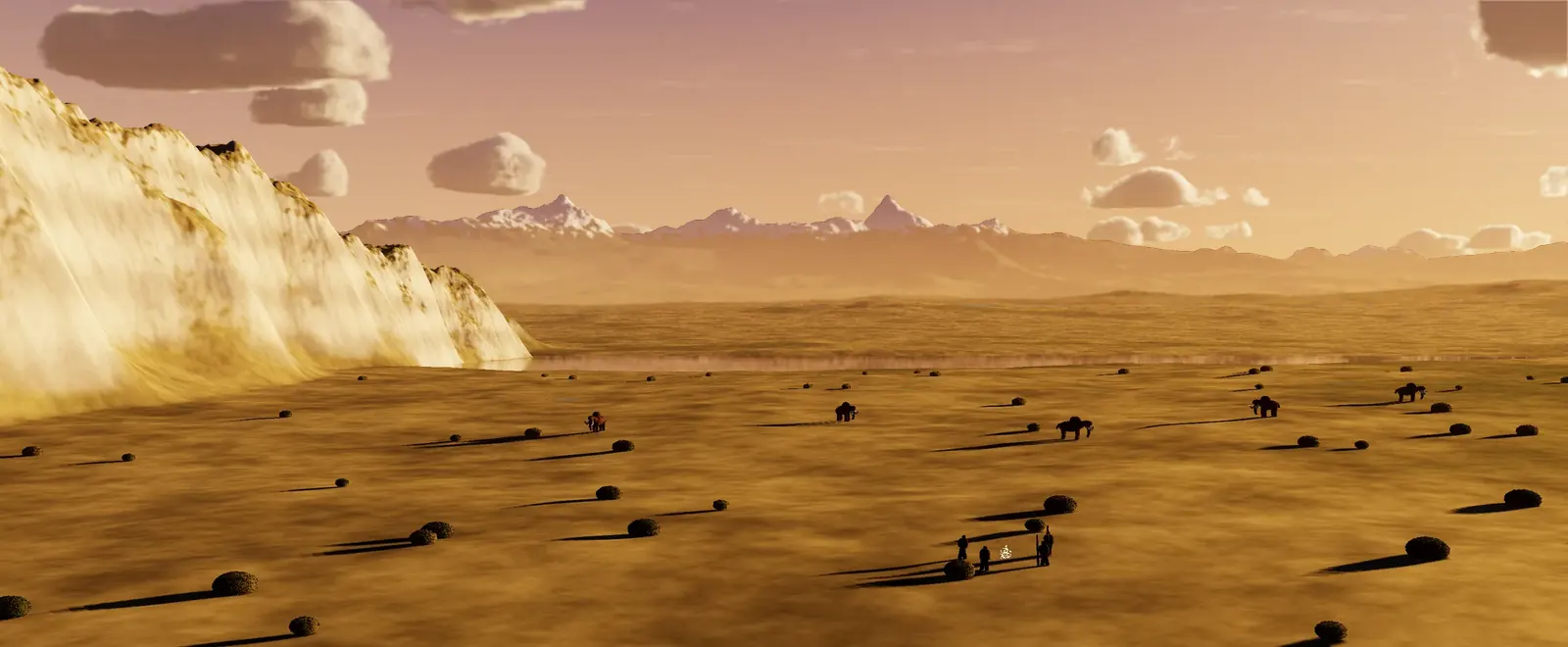

Sumer was an early urban civilization in southern Mesopotamia, in what is now southern Iraq, between the Tigris and Euphrates rivers. Its independent city-states, among them Uruk, Ur, Lagash and Eridu, were built around temples and depended on irrigated agriculture. The Sumerians are credited with developing cuneiform, one of the earliest writing systems, around the late fourth millennium BCE, and with the first monumental stepped temples known as ziggurats. Their cities were united by Sargon of Akkad in the twenty-fourth century BCE, and the Third Dynasty of Ur later revived Sumerian rule. Political power passed to other peoples around 2000 BCE, but the Sumerian language survived for centuries as a language of religion and scholarship.
Before and after
- from c. 5,600s BCE to 4,900s BCELinear Pottery culture
- c. 5,550 BCEEruption of Tao-Rusyr Caldera
- c. 5,550 BCEEruption of Mashu
- from 56th century BCE to 35th century BCEUbaid period
- from 56th century BCE to 20th century BCESumer
- from 55th century BCE to 27th century BCECucuteni–Trypillia culture
- from 55th century BCE to 45th century BCEVinča culture
- 6th millennium BCEDiscovery of silver
- 6th millennium BCEOrigins of Indian religions
More in Evolution & life
- from about 50,000 years ago to 9,726 years agoUpper Paleolithic
- about 41,000 years agoNeanderthals disappear from Europe
- about 23,100 years agoPeople are already in North America
- about 15,100 years agoDogs are domesticated
- about 13,000 years agoThe megafauna of the Americas die out
- c. 9,750s BCEQuaternary extinction event
The era
This moment belongs to the Human prehistory (300,000 years ago to 3,200 BCE), the human story before writing.