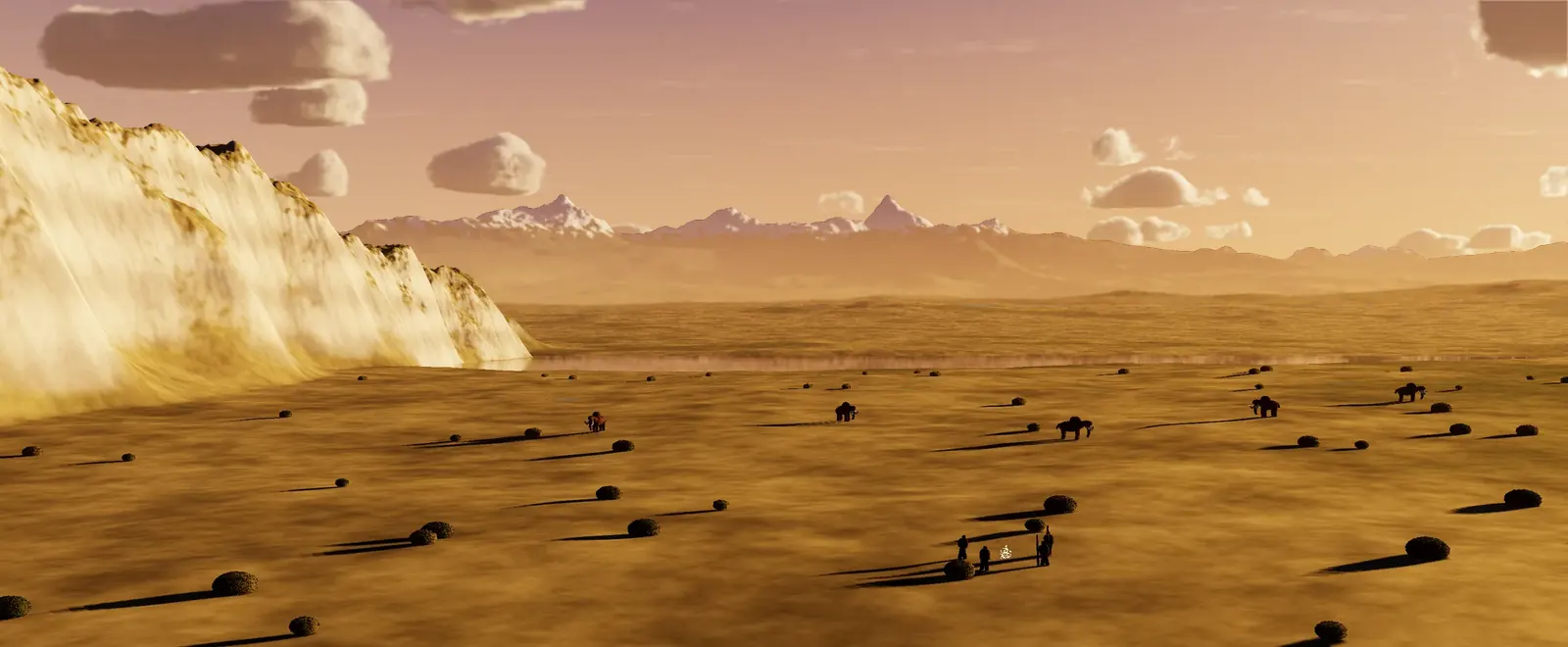

The Quaternary extinction event refers to the loss of many large animals, known as megafauna, towards the end of the last ice age and the start of the Holocene. Mammoths, woolly rhinoceroses, giant ground sloths, sabre-toothed cats and many other species disappeared from different continents, in a pattern that varied from place to place. Scientists debate the causes: some stress hunting by expanding human populations, others point to rapid climate change at the end of the Pleistocene, and many consider a combination of both. The extinctions were especially severe in the Americas and in Australia. They changed ecosystems and shaped the animal world that humans inherited.
Before and after
- from about 13,000 years ago to 9,750s BCEYounger Dryas
- about 12,400 years agoEruption of Moekeshiwan [Lvinaya Past]
- about 12,000 years agoHolocene extinction
- from about 12,000 years ago to 7th millennium BCEConstruction of Göbekli Tepe
- c. 9,750s BCEQuaternary extinction event
- 10th millennium BCEThe Holocene begins
- c. 9,501 BCEBuilders raise the first monumental temple at Gobekli Tepe
- from c. 9,050s BCE to 8,850s BCEClovis culture
- from 10th millennium BCE to 3rd millennium BCENeolithic revolution
More in Evolution & life
- from about 50,000 years ago to 9,726 years agoUpper Paleolithic
- about 41,000 years agoNeanderthals disappear from Europe
- from about 40,000 years ago to 31,000 years agoAurignacian
- about 23,100 years agoPeople are already in North America
- about 15,100 years agoDogs are domesticated
- about 13,000 years agoThe megafauna of the Americas die out
The era
This moment belongs to the Human prehistory (300,000 years ago to 3,200 BCE), the human story before writing.