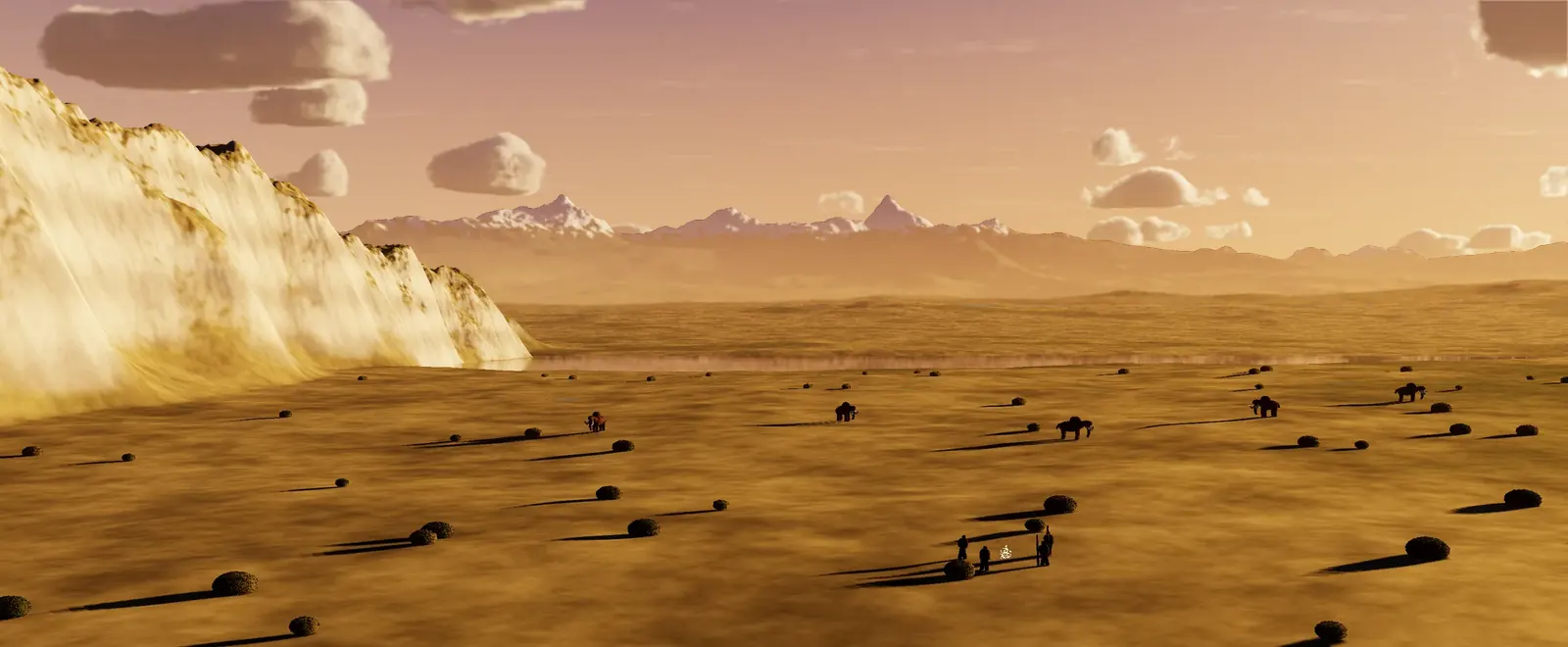

On a hilltop in south-eastern Turkey, hunter-gatherers carved and raised circles of T-shaped limestone pillars up to 5.5 metres tall, decorated with foxes, snakes, boars and birds, around 9500 BC. This was some 6,000 years before Stonehenge and before farming or pottery appeared in the region. The site was surveyed in the 1960s but recognised as extraordinary only in 1994 by the German archaeologist Klaus Schmidt, who excavated it until 2014. It suggests that large communal ceremonies came before settled life, and may have helped to bring about farming. The builders buried the enclosures around 8000 BC.
Before and after
- about 12,000 years agoHolocene extinction
- from about 12,000 years ago to 7th millennium BCEConstruction of Göbekli Tepe
- c. 9,750s BCEQuaternary extinction event
- 10th millennium BCEThe Holocene begins
- c. 9,501 BCEBuilders raise the first monumental temple at Gobekli Tepe
- from c. 9,050s BCE to 8,850s BCEClovis culture
- from 10th millennium BCE to 3rd millennium BCENeolithic revolution
- from 10th millennium BCE to 3rd millennium BCENeolithic
- from 10th millennium BCE to 6th millennium BCEMesolithic
More in Civilizations & archaeology
- c. 7,350s BCEConstruction of Cueva de las Manos
- 8th millennium BCEOrigins of Athens
- from 56th century BCE to 35th century BCEUbaid period
- 5th millennium BCEOrigins of Jerusalem
- c. 4,000 BCEOrigins of Thinis
- c. 3,600 BCEConstruction of Ġgantija
The era
This moment belongs to the Human prehistory (300,000 years ago to 3,200 BCE), the human story before writing.