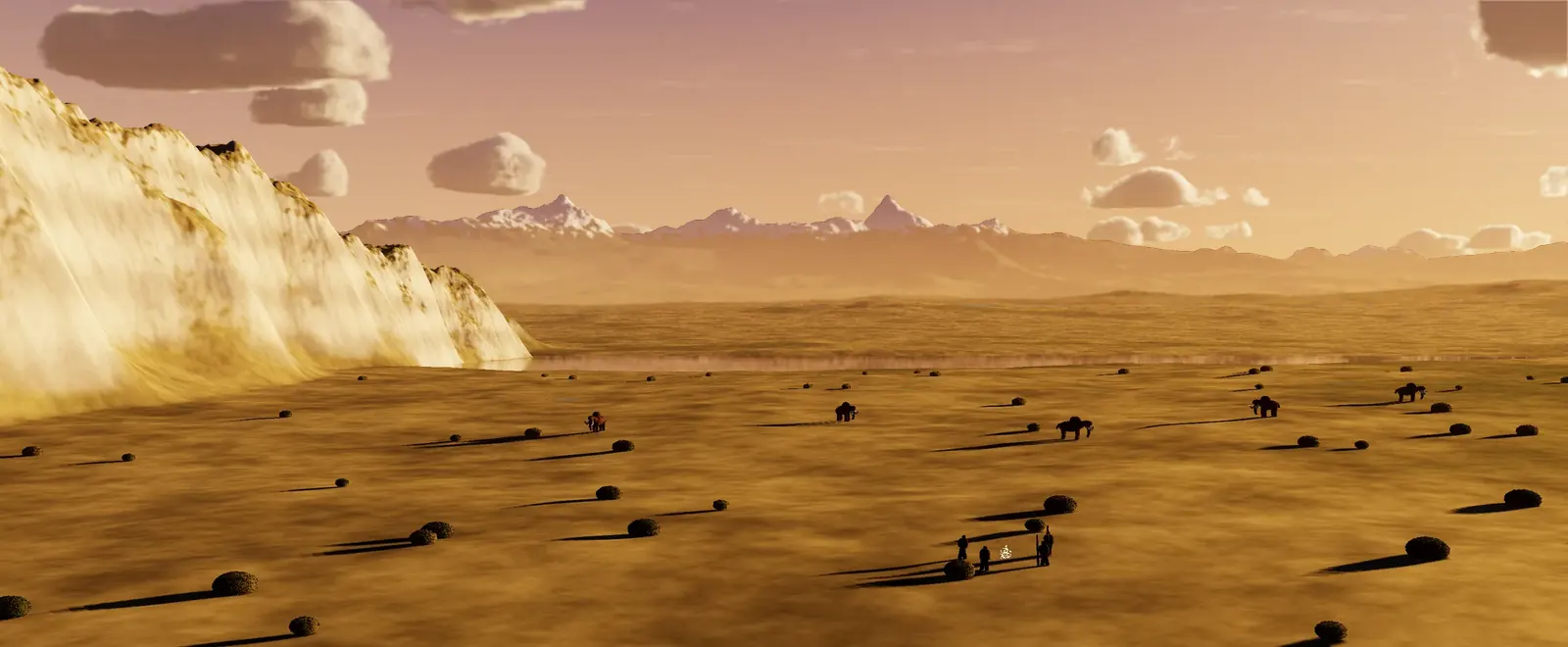

Jarmo is an archaeological site in the foothills of the Zagros Mountains in northern Iraq, near Chemchemal in Iraqi Kurdistan. It was excavated in the late 1940s and 1950s by Robert Braidwood of the University of Chicago, and the project became a landmark test of the idea that farming began in the hilly flanks of the Fertile Crescent rather than in river valleys. The village consisted of mud-walled houses, and its inhabitants grew wheat and barley, kept goats and probably sheep, and made stone tools, with pottery appearing only in the later levels. It was one of the first sites dated by radiocarbon, and it remains a key example of the transition from hunting and gathering to settled farming.
Before and after
- c. 7,460 BCEEruption of Pinatubo
- c. 7,420 BCEEruption of Fisher
- c. 7,350s BCEConstruction of Cueva de las Manos
- from c. 7,101 BCE to 5,701 BCECatalhoyuk grows into a large Neolithic town
- from c. 7,090s BCE to 4,950s BCEOrigins of Jarmo
- 8th millennium BCEOrigins of Athens
- from 8th millennium BCE to 4th millennium BCEOrigins of Khirokitia
- 8th millennium BCEDiscovery of copper
- 71st century BCEMaize is domesticated in Mexico
More in Civilizations & archaeology
- 86th century BCESheep, goats and cattle are domesticated
- 71st century BCERice is domesticated in the Yangtze valley
- from 7th millennium BCE to 2nd millennium BCEUgarit
- from 56th century BCE to 35th century BCEUbaid period
- c. 4,000 BCEOrigins of Thinis
- from c. 4,000 BCE to 3,100 BCEUruk period
The era
This moment belongs to the Human prehistory (300,000 years ago to 3,200 BCE), the human story before writing.