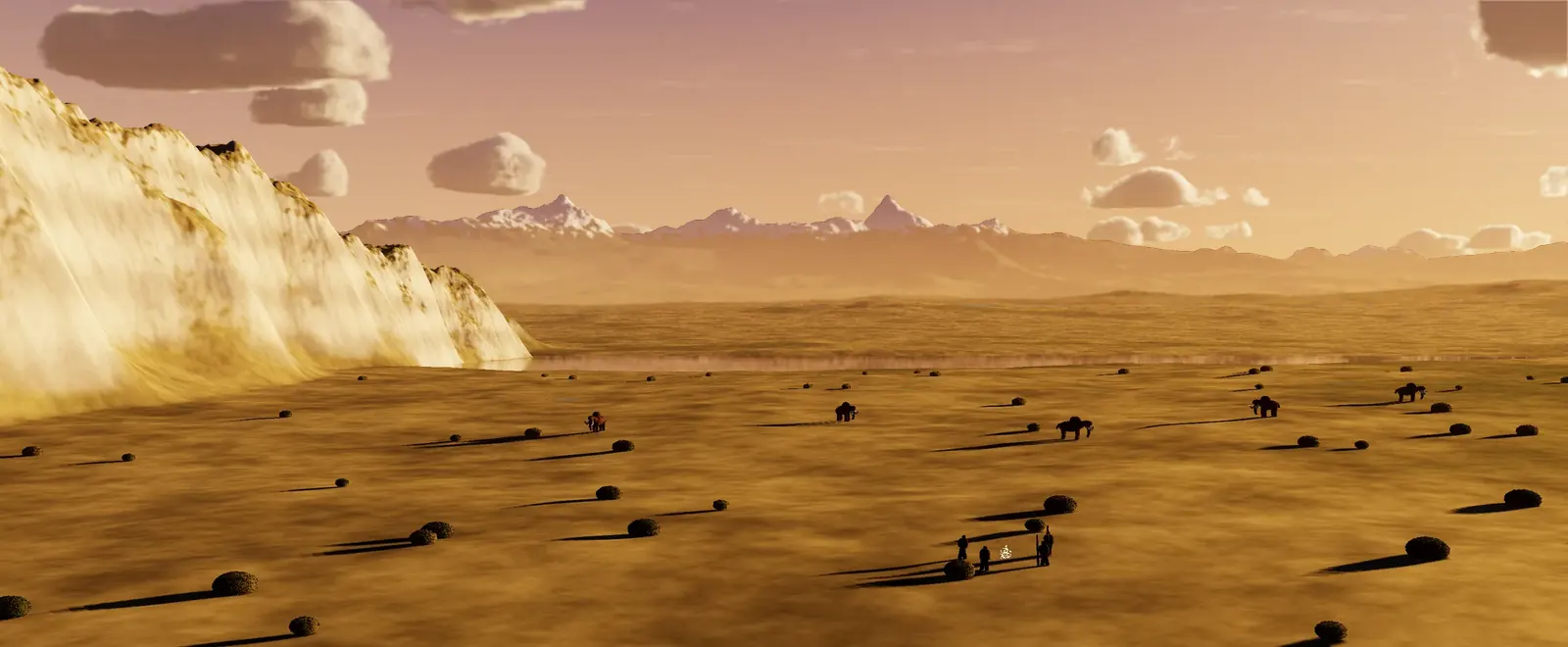

Ugarit was an ancient city on the Mediterranean coast of northern Syria, near modern Latakia, whose site, Ras Shamra, was occupied from a very early time, in the Neolithic period. It reached its peak in the Late Bronze Age as the capital of a trading kingdom between the Egyptian, Hittite and Mesopotamian worlds, with a busy port. Excavations that began in the 1920s found thousands of clay tablets in several languages, including Ugaritic, written in a cuneiform alphabet of thirty signs, which is one of the earliest known alphabets. Its mythological texts, such as the Baal Cycle, shed light on the religion of Canaan and the background of the Hebrew Bible. The city was destroyed around the end of the Bronze Age collapse and never rebuilt.
Before and after
- from 66th century BCE to 31st century BCEPredynastic Period of Egypt
- c. 6,440 BCEEruption of Kurile Lake
- c. 6,300 BCEEruption of Aniakchak
- c. 6,050 BCEEruption of Menengai
- from 7th millennium BCE to 2nd millennium BCEUgarit
- 7th millennium BCEDiscovery of gold
- 61st century BCEThe earliest known wine is made in Georgia
- c. 5,900 BCEEruption of Crater Lake
- c. 5,700 BCEEruption of Khangar
More in Civilizations & archaeology
- c. 7,350s BCEConstruction of Cueva de las Manos
- 8th millennium BCEOrigins of Athens
- from c. 7,000 BCE to 586 BCEConstruction of Tel Megiddo
- from 56th century BCE to 35th century BCEUbaid period
- 5th millennium BCEOrigins of Jerusalem
- c. 3,600 BCEConstruction of Ġgantija
The era
This moment belongs to the Human prehistory (300,000 years ago to 3,200 BCE), the human story before writing.