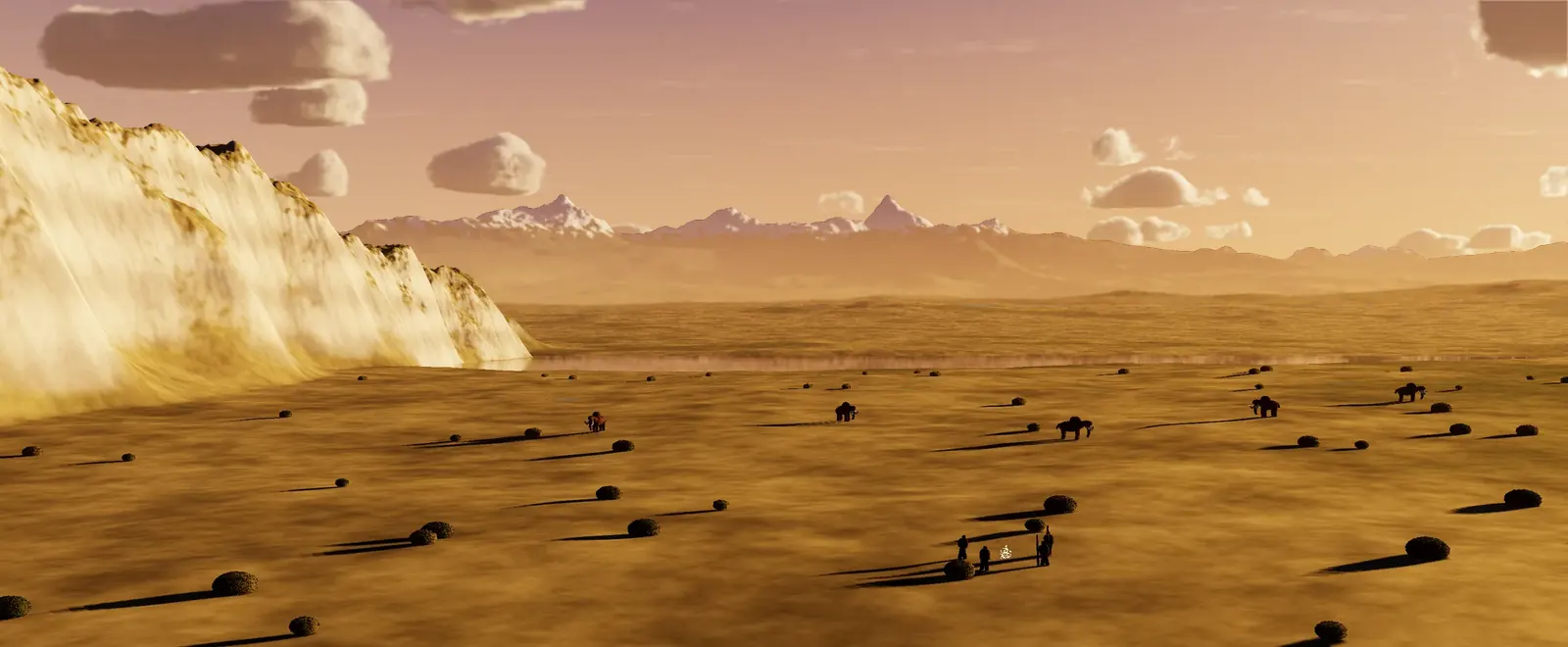

The Ubaid period was a prehistoric culture of southern Mesopotamia, named after the site of Tell al-Ubaid near Ur in Iraq, and it is the earliest known period of settled life in the region of southern Iraq. Its communities lived in villages of mudbrick houses and practised irrigated farming, fishing and herding, and made distinctive pottery painted with dark geometric designs. Some settlements, such as Eridu, built monumental temples on platforms, an early sign of social organisation and religion. The Ubaid culture spread over a wide area of the Near East, including Syria and the Persian Gulf, and it was followed by the Uruk period, in which the first cities developed.
Before and after
- c. 5,680 BCEEruption of Crater Lake
- from c. 5,600s BCE to 4,900s BCELinear Pottery culture
- c. 5,550 BCEEruption of Tao-Rusyr Caldera
- c. 5,550 BCEEruption of Mashu
- from 56th century BCE to 35th century BCEUbaid period
- from 56th century BCE to 20th century BCESumer
- from 55th century BCE to 27th century BCECucuteni–Trypillia culture
- from 55th century BCE to 45th century BCEVinča culture
- 6th millennium BCEDiscovery of silver
More in Civilizations & archaeology
- c. 9,501 BCEBuilders raise the first monumental temple at Gobekli Tepe
- from 10th millennium BCE to 3rd millennium BCENeolithic
- from 76th century BCE to 25th century BCEChalcolithic
- from 5th millennium BCE to 1st millennium BCEAncient Egypt
- from c. 3,300 BCE to 1,100 BCEMinoan civilization
- from 4th millennium BCE to 1st millenniumAncient history
The era
This moment belongs to the Human prehistory (300,000 years ago to 3,200 BCE), the human story before writing.