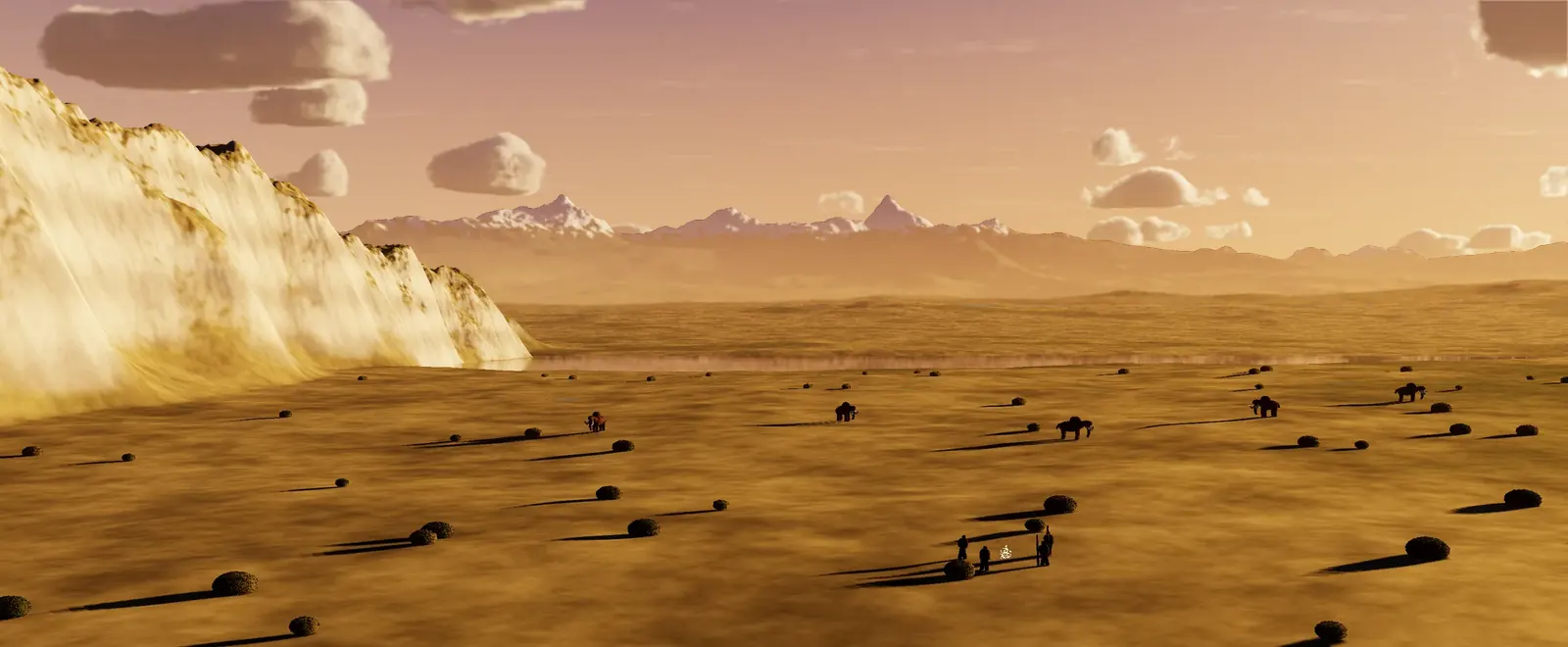

The Pre-Columbian era is the period of the Americas before significant European contact, which began with the voyages of Christopher Columbus. It covers the entire span of human settlement of the continents, from the first arrival of people from Asia to the rise of complex societies. Dates for the earliest settlement are debated, with some archaeological finds suggesting a presence far earlier than the traditional estimate. Societies ranged from small hunter-gatherer groups to large states, such as the Maya cities, the Aztec Empire in Mesoamerica and the Inca Empire in the Andes, which built monuments, roads and cities. European arrival brought epidemic disease, conquest and profound disruption, but many Indigenous peoples and cultures have survived.
Before and after
- from about 302,000 years ago to 32,000 years agoMiddle Paleolithic
- from about 115,000 years ago to 10th millennium BCELast Glacial Period
- about 75,100 years agoSymbolic engraving at Blombos Cave
- about 51,300 years agoSulawesi cave art is made
- from about 50,000 years ago to 2nd millenniumPre-Columbian era
- from about 50,000 years ago to 9,726 years agoUpper Paleolithic
- about 41,000 years agoNeanderthals disappear from Europe
- from about 40,000 years ago to 31,000 years agoAurignacian
- about 36,100 years agoChauvet cave paintings are made
More in Evolution & life
- from about 17,000 years ago to 12,000 years agoMagdalenian
- from about 16,000 years ago to 8th millennium BCEEpipaleolithic
- from c. 9,050s BCE to 8,850s BCEClovis culture
- from 55th century BCE to 27th century BCECucuteni–Trypillia culture
- from 55th century BCE to 45th century BCEVinča culture
- from 36th century BCE to 18th century BCECaral–Supe civilization
The era
This moment belongs to the Human prehistory (300,000 years ago to 3,200 BCE), the human story before writing.