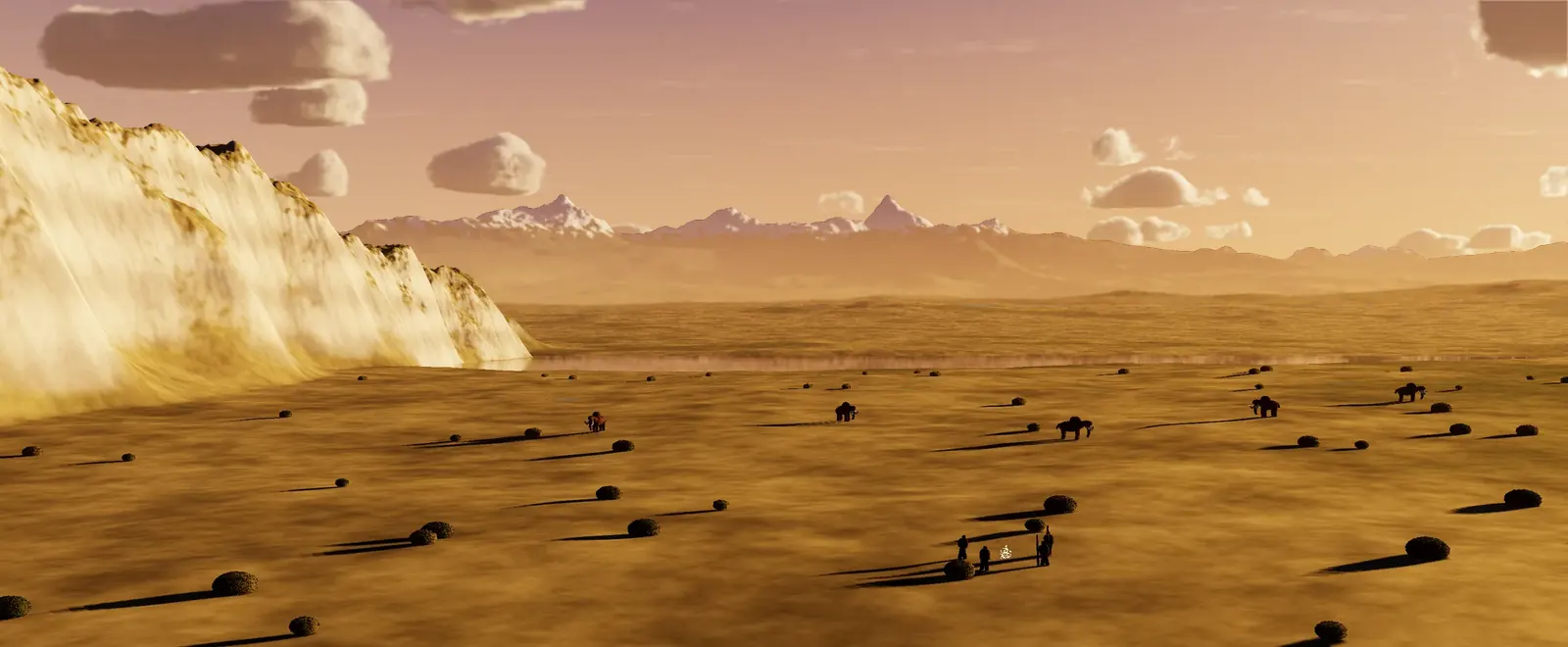

The Last Glacial Maximum was the period in the most recent ice age when ice sheets reached their greatest extent and global temperatures were at their lowest. Vast ice sheets covered much of Canada, northern Europe and parts of Asia, and glaciers expanded in mountain ranges around the world. So much water was locked up in ice that sea level stood well over a hundred meters below today's, exposing land bridges such as Beringia between Siberia and Alaska and joining the British Isles to the continent. The climate was cold, dry and windy across large regions, and human populations retreated into refuges and adapted to harsh steppe-like landscapes. Warming began slowly afterward, and the ice sheets retreated over the following ten thousand years or so.
Before and after
- from about 40,000 years ago to 31,000 years agoAurignacian
- about 36,100 years agoChauvet cave paintings are made
- about 30,100 years agoThe Venus of Willendorf is carved
- about 23,100 years agoPeople are already in North America
- about 21,000 years agoLast Glacial Maximum
- about 20,000 years agoThe earliest known pottery is made in China
- from about 17,000 years ago to 12,000 years agoMagdalenian
- from about 16,000 years ago to 8th millennium BCEEpipaleolithic
- about 15,100 years agoDogs are domesticated
More in Earth & climate
- c. 8,400 BCEEruption of Michinmahuida
- c. 7,420 BCEEruption of Fisher
- c. 6,440 BCEEruption of Kurile Lake
- c. 6,300 BCEEruption of Aniakchak
- c. 5,900 BCEEruption of Crater Lake
- c. 4,350 BCEEruption of Kikai
The era
This moment belongs to the Human prehistory (300,000 years ago to 3,200 BCE), the human story before writing.